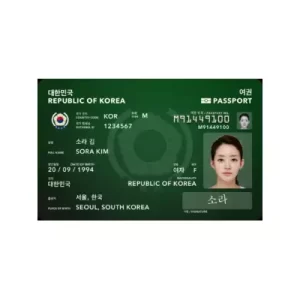
Buy South Korean ID Cards Online
$999.00
Buy South Korean ID Cards Online. Identity documents play an essential role in modern society. In South Korea, the national identity card system helps verify citizenship.
Buy South Korean ID Cards Online
Buy South Korean ID Cards Online. Identity documents play an essential role in modern society. In South Korea, the national identity card system helps verify citizenship, support government services, and maintain secure identification standards. As digital verification systems continue to evolve, understanding the structure, security features, and verification methods of official identification documents has become increasingly important.
This educational guide explains the South Korean ID card system, its key features, and how individuals and organizations can identify authentic government-issued identification.
What Is a South Korean ID Card?
The South Korean national identity card, commonly known as the Resident Registration Card, is the primary identification document used by citizens. It is issued by the government through the Ministry of the Interior and Safety, which manages population records and resident registration data.
The Resident Registration Card is typically issued to South Korean citizens once they reach a certain age and serves as an official proof of identity for many administrative and legal processes.
This card is widely used for:
-
Identity verification
-
Access to government services
-
Banking and financial procedures
-
Voting eligibility confirmation
-
Employment verification
Because it is such an important document, the South Korean government has implemented multiple security measures to prevent fraud or counterfeiting.
Key Information Displayed on a South Korean ID Card
A standard Resident Registration Card contains several important personal details that help confirm an individual’s identity.
Typical information on the card includes:
-
Full legal name
-
Resident registration number
-
Date of birth
-
Address of residence
-
Photograph of the cardholder
-
Issuing authority information
These details allow institutions and officials to confirm that the card belongs to the individual presenting it.
Security Features of the South Korean Resident Registration Card
Modern identification systems include multiple layers of protection to prevent misuse or duplication. South Korean ID cards incorporate several advanced security features designed to ensure authenticity.
1. Holographic Elements
One of the most noticeable security features is the presence of holographic overlays. These reflective images change appearance when viewed from different angles and are difficult to replicate accurately.
2. Microprinting Technology
Microprinted text is often included within the design of official identification cards. This extremely small text is only visible under magnification and helps prevent unauthorized reproduction.
3. Laser Engraving
Laser engraving technology is used to permanently embed personal information into the card material. This technique improves durability and prevents alteration.
4. High-Resolution Photograph
A digitally embedded photograph of the cardholder helps confirm that the document belongs to the individual presenting it.
5. Government Seal and Issuing Authority
Official government identification documents include seals or markings from the issuing authority to confirm authenticity.
Why ID Verification Is Important
Identity verification plays a critical role in many areas of society. Businesses, financial institutions, and government agencies rely on accurate identification documents to prevent fraud and maintain security.
Common situations where identity verification is required include:
-
Opening bank accounts
-
Employment background checks
-
Property or rental agreements
-
Government service applications
-
Travel-related documentation
Reliable identity verification protects both institutions and individuals from identity theft and fraud.
Digital Identity and Modern Verification Systems
South Korea is widely recognized for its advanced digital infrastructure. The country has been at the forefront of integrating digital services with identity verification systems.
Government agencies in Seoul and across the country have introduced digital verification tools that support online authentication.
These systems help streamline administrative processes and reduce paperwork while maintaining strong security standards.
Examples of digital identity initiatives include:
-
Online identity authentication systems
-
Mobile verification tools
-
Government digital service platforms
Digital identity technologies continue to improve convenience while maintaining strict identity protection measures.
How Organizations Verify Identification Documents
Organizations that handle official identification documents often follow structured verification processes.
Typical verification steps may include:
Visual Inspection
Checking the card for visible signs of tampering, unusual printing quality, or missing security elements.
Security Feature Review
Examining holograms, microprinting, and other security components to ensure they match official standards.
Database Confirmation
Some institutions verify identity numbers or registration details using authorized government databases.
Biometric Confirmation
In some advanced verification environments, biometric systems such as facial recognition may be used to match the cardholder with the document photograph.
Preventing Identity Fraud
Identity fraud is a global concern, and governments continue to strengthen identification systems to reduce risks.
Preventative measures include:
-
Advanced card manufacturing technologies
-
Secure government databases
-
Strict application procedures
-
Public awareness campaigns
Individuals also play an important role in protecting their personal information.
Helpful safety practices include:
-
Avoid sharing personal identification details unnecessarily
-
Report lost or stolen documents immediately
-
Store identification securely
-
Monitor financial accounts for suspicious activity
These steps help reduce the likelihood of identity misuse.
The Importance of Legal Identity Documentation
Having proper legal identification allows individuals to participate fully in social and economic systems. Government-issued ID cards provide proof of identity that enables access to services such as healthcare, banking, education, and voting.
In countries like South Korea, the Resident Registration Card serves as a cornerstone of the national identification system.
Maintaining secure identification infrastructure helps governments deliver services efficiently while protecting citizens’ identities.
Global Trends in Identification Security
Many countries are currently upgrading their identification systems to incorporate new technologies.
These developments may include:
-
Biometric identity verification
-
Digital ID wallets
-
Smart chip-enabled identification cards
-
Blockchain-based identity protection systems
These innovations aim to improve both convenience and security in identity management.
About Higgins Document Solution
Higgins Document Solution focuses on providing educational information about identity documents, verification processes, and document security awareness.
Our goal is to help individuals and organizations better understand how identification systems work and how to recognize important security features.
For inquiries or additional information:
Email: info@higginsdocumentsolution.com
Website: https://higginsdocumentsolution.com/
Final Thoughts
The South Korean Resident Registration Card represents a highly secure and technologically advanced identification system. With multiple layers of security features and government oversight, the card plays a vital role in identity verification across the country.
As digital identity systems continue to evolve, understanding the structure and security elements of official identification documents becomes increasingly important.
By staying informed about identification security and verification practices, individuals and organizations can better protect themselves from identity fraud and contribute to a safer identification ecosystem.
Be the first to review “Buy South Korean ID Cards Online”
Related products

DRIVER LICENCE
ID Cards
ID Cards
ID Cards
ID Cards
DRIVER LICENCE
ID Cards
DRIVER LICENCE
Reviews
There are no reviews yet.